January 5, 2026
Building Strong Teams
Craig Nelson, CEO
“When death is the consequence of failure – we get good fast.”
Business Teams like Special Rescue Teams
We are in an era of high employee turnover and employment uncertainty. But what does this mean for industries that make essential products like food, dairy, beverage, and pharmaceuticals? The food we eat, the beverages we drink, and the supplements and meds we take have to be made with experience and care.
There is sentiment that better software, automation, and AI can bridge this gap of experienced employees, and even management. But is this realistic, and really cost effective?
I have had the privilege to consult and speak for decades on food safety and regulatory matters and have continued to do so recently. New concerns are being addressed of a shortage of experience in people and companies compared to a decade ago.
I believe investment in people is the answer.
My Studies of Amazing Teams
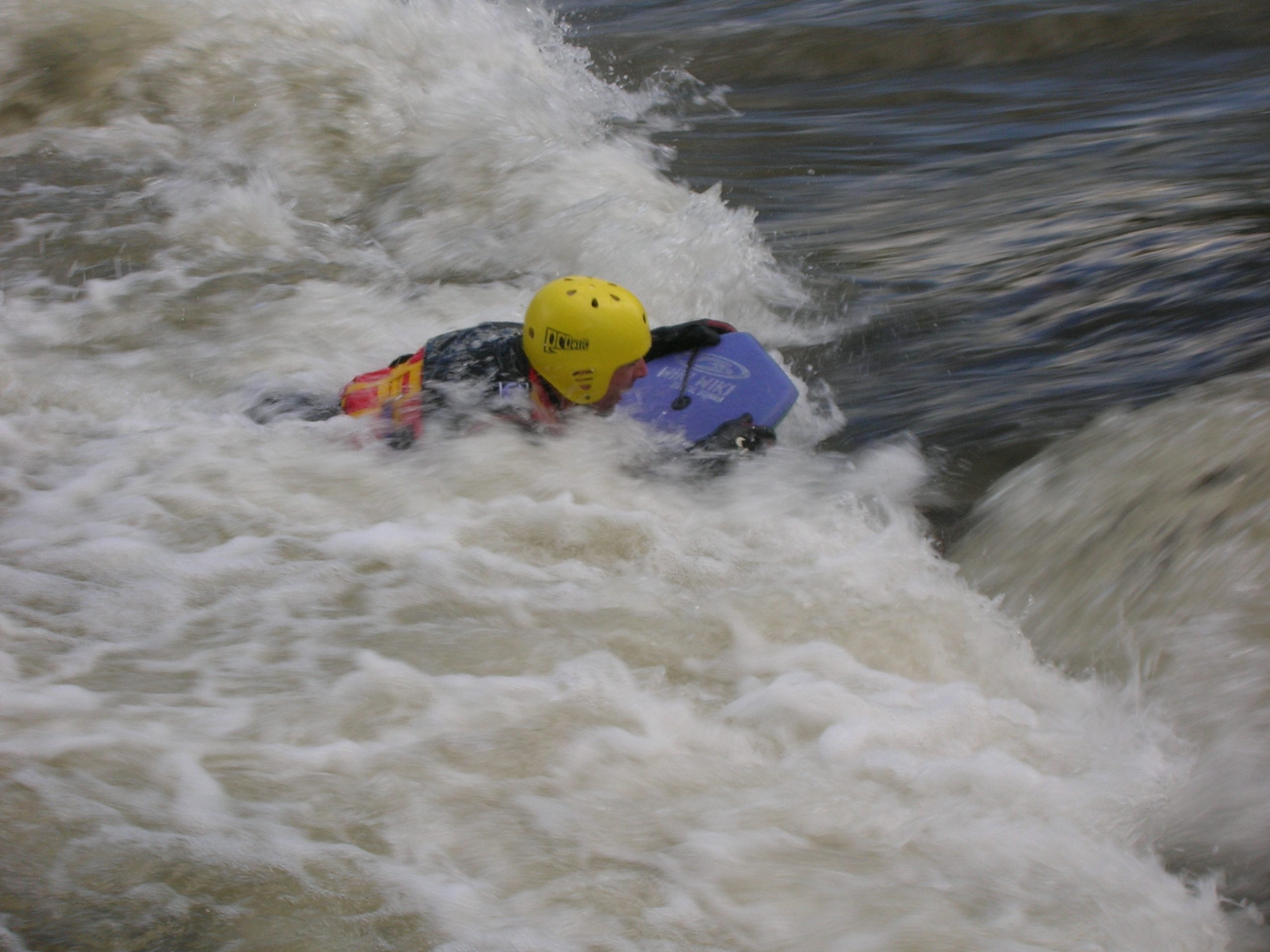
In the early 1990’s I was part of an effort to improve high risk water rescue in North America. Kayaking was an exhibition sport in the 1992 Olympics in Barcelona. A swift water rescue team we formed was successfully protecting athletes on other river venues and we were asked for opinions on how to protect the Olympic athletes. Shortly after, when the 1996 Olympics were scheduled for Atlanta, our water rescue team was asked to lead the protection of the athletes and protect the field of play. This sent us on a search for the best teams, and what made them the best. We knew we needed to be the best for the Olympics.
Being a person who enjoys learning experientially, I signed up for training courses sponsored by various teams. Dive Rescue International, a swift water rescue team in Thiensville Wisconsin that had notoriety in the rescue world, Nantahala Outdoor Center, and people like Slim Ray, Les Bechtel. As the years progressed I sought out team leaders and mentors from other special teams such as White House staff, major companies, NASA astronauts, military special forces and fugitive strike teams. Some of these were non-profit, some for profit. Across all these disciplines there were recurring commonalities.
Strong Team Commonalities
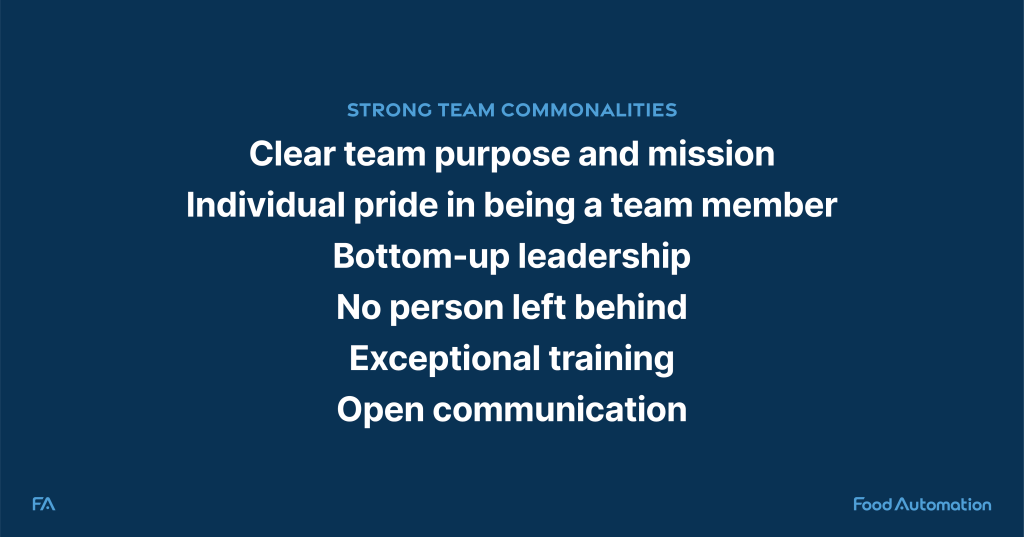
Clear team purpose and mission
Most importantly every member of the team understood the team’s simple purpose and the mission statement supported how every team member was vital to accomplishing that mission. Our team that prepared for the Olympics developed “To extract every athlete to course side in less than 30 seconds.” This purpose was the foundation and message for every whitewater training session, team position tryouts, and team placement and deployment. As the team grew every team member from the in-water rescuers to the media communications officer’s subtext was this purpose. In my current process technology company, our mission is “To work with the best clients and vendors.” Teams that have a greater purpose than any individual goal. These deeper purposes allow each team member to appreciate their individual role in the bigger picture.
Individual pride in being a team member
In the best teams, each team member had pride in some aspects of the entire team, and of their individual contribution. In a water rescue team, I was toured through the response station where we saw boats, ropes, underwater and above water gear, communications and electronics. Every member understood the importance of each thing even though they never touched most of it. In other words, they were proud of each facet of the team, and they were especially proud of their leadership. Every team had the mentality of a Swiss watch; lots of precision moving parts that all come together to show the time. Each member clearly saw what gear in that watch they were and were proud to point that out.
Bottom-up leadership
Leadership in these specialized teams was always “bottom up” meaning that the top leaders understood every position below them. The leaders certainly were not the best at any of the tasks needed to be successful for the outcome but understood every person’s role. Think about it. Professional sports teams have head coaches that certainly understand every nuance of the game. Aerobatic flight teams have leaders that were or are also excellent aerobatic pilots. Yet I’ve worked in companies where the leaders, especially after buyouts, know nothing about the customer base of how to perform any team member’s tasks. The disconnection creates unappreciated employees, high turnover, and usually poor company performance after some time. I’ve also seen in many successful ventures and specialized teams where leadership spends some time in a lower position a few times a year. Southwest Airlines’ book on their early success talks about management working in baggage, or ticket counters, so they appreciate efforts of other factions of the team.
No Person Left Behind
“No person left behind”. We all know that statement where it’s about rescuing someone from behind enemy lines, or from a burning building. But this applies as well to every work environment. Does each team member understand that this means they support another team member’s weaknesses? Leaders should assess how teams are grouped, or what people are sent to customer sites. Will they be successful? Do they have support with them or preplanned remote support?
Exceptional Training
Exceptional Training. Every successful team visited had robust training programs. Training was done to allow failure in a controlled environment to allow people to push their comfort limits. In business we’ve seen training take people into areas of discomfort. Training also covered a broad spectrum of technical training for personal and professional growth. In great business teams they train employees in positions related to technical advancement, but also in personal growth, conflict management, and even skills in other positions. People evolve; the best teams want to offer diverse training to enable people to evolve in directions that may not be anticipated even by the individual themselves. Allowing people to evolve within your team, or company reduces employee turnover.
Open Communications
Open communications. Rescue teams heavily rely on pre mission briefing and post mission debriefing. Assignments are given out, the core purpose of the mission is communicated, and risks are evaluated. Backup plans for individuals and the mission are briefed. After the mission the outcome is debriefed. In the case of rescue, critical incident stress debriefing was applied to help people with the grief they observed and experienced. Other team internal news including finances, (good and bad), were freely shared with everyone on the team. Sharing hardships and challenges forms a tight community. Tight communities stick together to solve the toughest challenges.
While literal death isn’t a consequence of team failure in business as it is in special operations, rescue, or special forces. Death of a company often is. Observing team building at its best helps build better business teams. This era’s focus on acquiring companies, cutting benefits, and prioritizing feeding the wealth of the investor(s) is creating a lot of short term gains with long term company death.